Introduction: The Dream We All Share
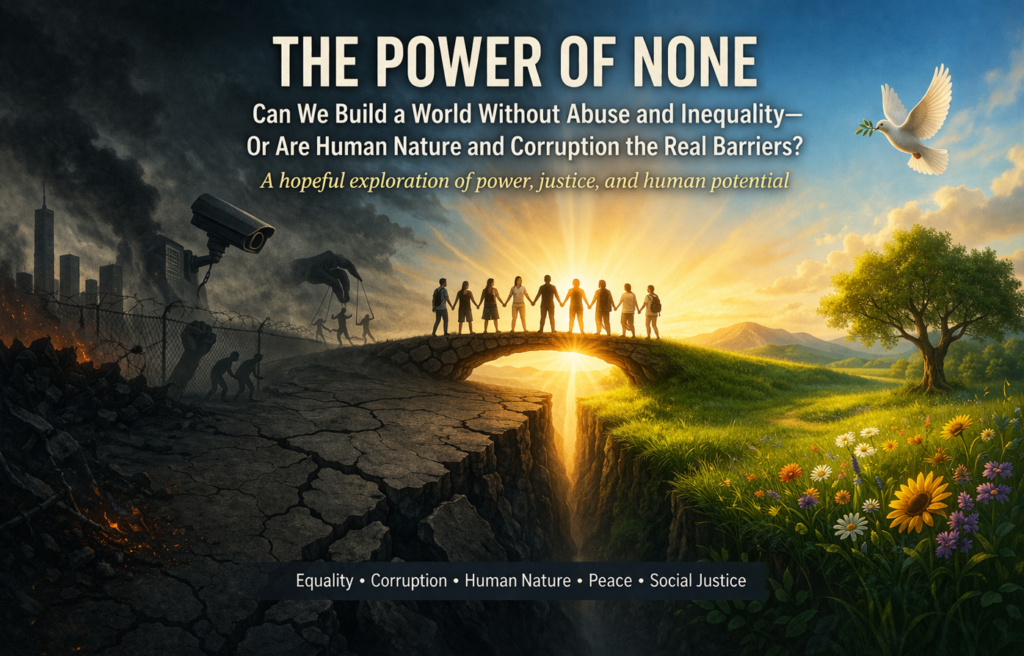
Imagine a world where no one is abused, no one is oppressed, and no one is treated unfairly. A world where power doesn’t divide people, but instead, everyone stands on equal ground—respected, valued, and safe.
This vision is not new. It lives quietly in the minds of students, thinkers, leaders, and everyday people. It appears in conversations, protests, philosophies, and hopes for the future.
But here’s the difficult question:
Can such a world truly exist?
Or are we held back by something deeper—something rooted in human nature itself, amplified by systems that allow corruption and inequality to grow?
This is where the idea of “The Power of None” emerges—not as a literal absence of power, but as a challenge to rethink how power, fairness, and human behavior interact.
What Does “The Power of None” Really Mean?
At first glance, “The Power of None” sounds like a world without power. But in reality, it’s more nuanced than that.
It represents:
- A world without abusive power
- A system without unfair dominance
- A society where no one is above accountability
It’s not about removing structure or leadership. Instead, it asks:
What if power didn’t corrupt?
What if influence didn’t lead to inequality?
What if systems were designed to protect everyone equally?
In essence, “The Power of None” is a philosophical ideal—a way to imagine a world where power exists, but injustice does not.
The Reality of Human Complexity
To understand whether this vision is possible, we must first confront a difficult truth:
Humans are complex.
We are capable of:
- Kindness and cruelty
- Cooperation and competition
- Empathy and self-interest
This duality shapes every system we create—governments, economies, institutions, and communities.
Why Complexity Matters
Even with the best intentions:
- People may prioritize their own needs over others
- Groups may compete for resources or influence
- Fear, insecurity, or ambition can drive harmful decisions
This doesn’t mean humans are “bad.” It means we are imperfect.
And any system built by imperfect beings will carry those imperfections.
Corruption: A Systemic Issue, Not Just a Personal One
When we think about inequality and abuse, corruption often comes to mind. But it’s important to understand something crucial:
Corruption is not just about individuals—it’s about systems.
How Corruption Emerges
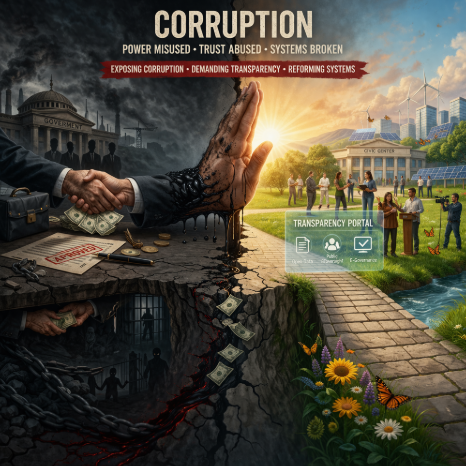
Corruption tends to grow when:
- Power is unchecked
- Transparency is limited
- Accountability is weak
- Incentives reward self-interest over fairness
In such environments, even well-intentioned people can make unethical choices.
The Bigger Picture
Instead of asking:
“Why are people corrupt?”
A better question is:
“What conditions make corruption more likely?”
This shift in thinking is essential. It moves us away from blame and toward solutions.
Is a World Without Abuse and Inequality Possible?
Now we arrive at the central question.
Can we eliminate abuse and inequality entirely?
The honest answer is:
Probably not completely.
But that doesn’t mean the effort is pointless.
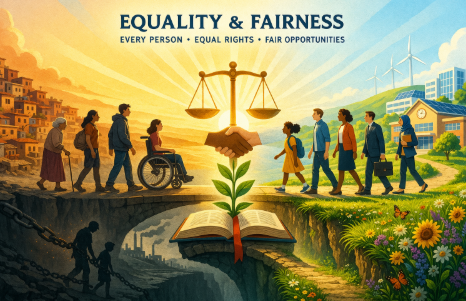
Progress vs. Perfection
History shows us that:
- Violence has decreased in many parts of the world
- Human rights have expanded
- Awareness of injustice has grown
These changes didn’t create a perfect world—but they made a better one.
And that’s the key idea:
The goal is not perfection. The goal is progress.
Rethinking Power: The Real Problem
One of the biggest misconceptions is that power itself is the problem.
But power is not inherently bad.
What Power Really Is
Power is simply:
- The ability to influence outcomes
- The capacity to make decisions
- The responsibility to lead or act
The real issue is how power is used.
The Danger of Unchecked Power
Problems arise when power becomes:
- Concentrated in too few hands
- Protected from accountability
- Used for personal gain instead of collective good
This is where inequality and abuse begin to grow.
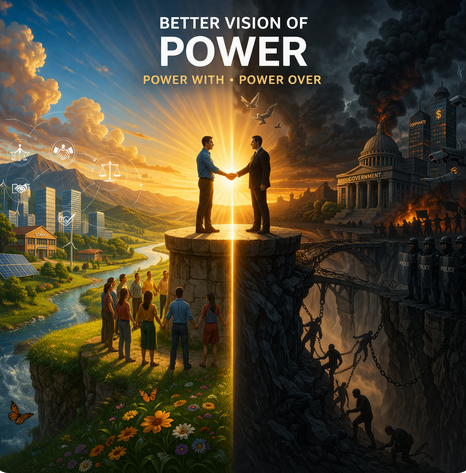
A Better Vision of Power
Instead of eliminating power, we should aim for:
- Balanced power
- Transparent systems
- Shared responsibility
In this sense, “The Power of None” becomes:
A world where no one has unfair power over others.
The Role of Systems in Shaping Behavior
A powerful insight often overlooked is this:
Systems shape behavior more than intentions do.
Even good people can act unfairly in flawed systems.
Examples of System Influence
- Competitive environments can encourage selfish behavior
- Lack of oversight can enable abuse
- Unequal access to resources can create long-term disparities
This means that if we want a more peaceful and fair world, we must focus on:
Designing better systems—not just better individuals.
What Would a More Peaceful and Fair World Look Like?
If we can’t achieve perfection, what can we realistically aim for?
A better world would include:
1. Reduced Harm
- Fewer instances of violence and abuse
- Strong protections for vulnerable groups
2. Fair Opportunities
- Access to education, healthcare, and basic needs
- Systems that reduce extreme inequality
3. Accountability
- Leaders and institutions held responsible for their actions
- Clear consequences for abuse of power
4. Empathy and Awareness
- Greater understanding across cultures and perspectives
- More open dialogue and less division
This vision is not unrealistic—it’s already happening in many ways, though imperfectly.
The Role of Individuals: Do We Really Matter?
It’s easy to feel that one person cannot make a difference in such a large and complex world.
But change rarely starts at the top. It often begins with individuals.
What Individuals Can Do
- Challenge unfair behavior when they see it
- Educate themselves and others
- Support fair and ethical systems
- Practice empathy in daily life
These actions may seem small, but collectively, they shape culture—and culture influences systems.
The Role of Education
If there is one powerful tool for long-term change, it is education.
Not just academic education, but:
- Ethical thinking
- Critical reasoning
- Emotional intelligence
Education helps people:
- Question harmful systems
- Recognize injustice
- Make informed decisions
A more educated society is better equipped to reduce corruption and inequality.
The Tension We Must Accept
One of the most important insights in this discussion is this:
There will always be tension between ideals and reality.
- Between fairness and self-interest
- Between equality and hierarchy
- Between hope and limitation
Trying to eliminate this tension completely may not be possible.
But learning to manage it—that’s where progress happens.
A New Way to Think About Change
Instead of asking:
“Can we create a perfect world?”
We should ask:
“Can we create a better world than the one we have today?”
This shift changes everything.
It makes the goal:
- Achievable
- Measurable
- Continuous
And most importantly, it keeps hope grounded in reality.
Conclusion: The True Meaning of “The Power of None”
“The Power of None” is not about removing power, nor is it about achieving perfection.
It is about:
- Reducing harm
- Challenging injustice
- Rethinking how systems and people interact
It recognizes that:
- Human nature is complex
- Corruption is a systemic risk
- Perfection may be unreachable
But it also affirms something equally important:
A better world is always possible.
Not through one person.
Not through one idea.
But through continuous effort, awareness, and change.
The real power, in the end, may not be in having none—
But in ensuring that no one is above fairness, and no one is beneath dignity.
Frequently Asked Questions
Is it truly possible to build a world without abuse and inequality?
A completely perfect world is unlikely, but meaningful reductions in harm and inequality are achievable.
What does “The Power of None” actually mean?
It refers to a world where no one has unfair or abusive power over others.
Is human nature the main barrier?
It is a factor, but systems and incentives also play a major role.
How does corruption contribute to inequality?
It allows misuse of power, limiting fairness and opportunity.
Can corruption ever be eliminated?
Not entirely, but it can be reduced through accountability.
Is power always bad?
No, but it must be balanced and responsibly used.
What steps can improve fairness in society?
Education, accountability, and ethical systems are key.
What role do individuals play?
Individuals shape culture and influence systems through their actions.
Why is a perfect world difficult to achieve?
Because of human differences, limited resources, and conflicting interests.
What is the main takeaway?
We may not achieve perfection, but we can always move toward a better world.